A Rainy Evening, One Room and a Film Watched with the Sound in Mind
Watch a film with sound in mind using a rainy-evening listening plan to notice room tone, silence, and background details that shape your attention.
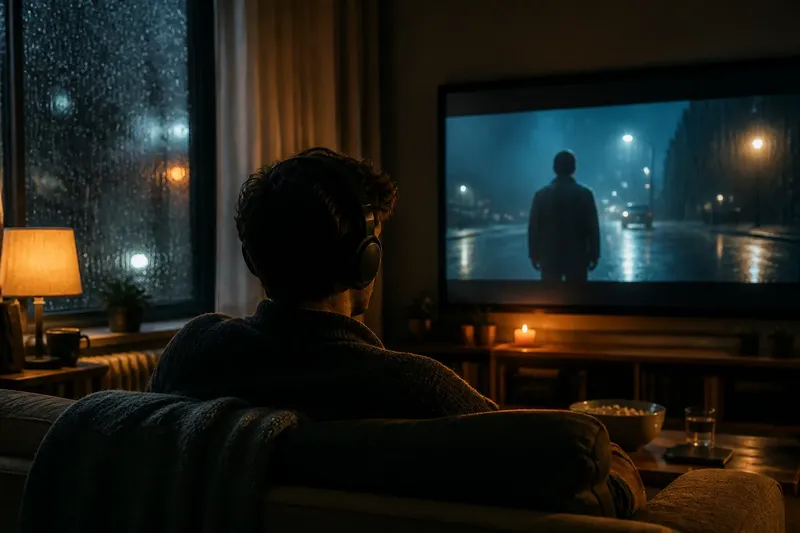
To watch a film with sound in mind, let the room settle before the opening scene. Rain against a window, a refrigerator’s low hum, or a radiator ticking can make you notice how the film creates its own acoustic space—and how that space shapes what you expect to happen.
This is a relaxed listening plan, not a hunt for hidden clues. Choose a film you can watch without captions if you’re comfortable doing so, keep the volume at a natural level, and let each activity guide one part of the evening.
How can you settle into the room before pressing play?
Give your ears a moment to register the sounds already around you. You don’t need to silence every appliance or pause the rain. The point is to hear your room as a place with a background, rather than treating quiet as the absence of sound.
Then start the film and notice its opening ambience. Is there a wash of traffic, wind, ventilation, or distant voices? Does the soundtrack begin almost bare? That first impression gives you a reference for the film’s room tone: the subtle, steady sound that makes a place feel occupied even when nobody speaks.
Room tone is like the paper behind a drawing. You might not focus on it, but it gives the stronger marks somewhere to sit. A kitchen scene with a faint refrigerator hum feels different from the same image over complete digital silence.
What sound establishes each place?
As the film moves between locations, pay attention to the background before studying the action. A hallway may carry a hollow ring; a crowded café may blur into overlapping talk; an outdoor scene may hold wind and distant road noise. These sounds give each place a texture, even when the camera shows only one corner of it.
Notice whether the ambience stays consistent as people move around. A character who leaves a lively room for a stairwell may carry a little of the conversation with them, or the noise may stop sharply at the doorway. Either choice shapes how connected the spaces feel. It can also make a threshold seem welcoming, isolated, or uneasy without any character saying so.
Choose one location change to follow. Let the film play normally, then ask yourself what sound told you that the setting had changed. Keeping the question small helps you listen closely without turning every scene into an assignment.
What does silence make you hear?
Film silence rarely means that every sound has vanished. A scene may lose music and dialogue while keeping breath, cloth, footsteps, or a faint electrical buzz. When a familiar background drops away, those small sounds can seem unusually close. Your attention has been redirected, not switched off.
Try to catch the moment just before the sound changes. Does the hum fade as a character notices something? Does the room become still after a door closes? The shift can make you wait for an explanation, or leave a feeling unresolved. Its effect depends on what the film has already taught your ears to expect.
There’s no need to rewind or identify every layer. Notice which sound suddenly feels prominent and what was removed to make space for it. That comparison often reveals more than asking whether a scene is simply quiet or loud.
How can you follow one small sound through a scene?
Pick a sound that is easy to recognize: a clock, rain on a roof, a pen tapping, or footsteps in a corridor. Listen for when it first appears, whether it continues under speech, and whether it changes when the scene’s mood shifts. A repeated sound can connect separate moments, but it can also become noticeable only after other sounds recede.
Imagine a film scene set during a storm. Rain patters steadily while two people talk at a kitchen table. When their conversation stops, a loose window latch begins to rattle, making the pause feel more exposed. When one person opens a cupboard, the ordinary clink of a cup restores a little ease. The sequence shows how background detail can guide attention without adding dialogue.
Keep your interpretation flexible. The rattling latch might suggest tension, or it might simply make the house feel old and drafty. Listen for how the sound relates to the scene before deciding what it means.
How does your rainy evening change what you hear?
At home, outside weather can blend with a soundtrack. Rain tapping your window may seem to continue the rain in the film, or it may make a quiet interior scene feel more sheltered by contrast. Notice the overlap without assuming it was intended. The viewing room is part of your experience, even when it isn’t part of the movie.
If an appliance becomes distracting, pause between scenes and move away from it if convenient. Avoid turning the volume up simply to overpower household noise; a comfortable, clear level makes small details easier to follow without making the evening tiring. If you use headphones, keep the sound at a level that feels comfortable.
Say you’re watching a film in a living room where rain is audible and the refrigerator cycles on during a hushed scene. You pause briefly, let the appliance settle, then resume. The observable result is a clearer sense of which sounds belong to the movie and which belong to your room—not a new meaning every viewer must share.
What should you listen for during a film?
What is room tone in a film?
Room tone is the subtle background sound that helps a place feel acoustically present, such as a faint hum or soft outdoor wash. It may continue beneath dialogue or become clearer during a pause.
Does silence in a movie mean there is no sound?
Not necessarily. A scene can remove music or speech while leaving breath, movement, or a quiet environmental layer, making those remaining sounds stand out.
Should you watch with headphones or speakers?
Either can work for attentive listening. Speakers let the room remain part of the experience, while headphones may make low-level details easier to hear. Choose the setup that feels comfortable in your space.
Do background sounds always have a symbolic meaning?
No. A sound may establish a location, maintain continuity, or add texture without pointing to a hidden message. Notice its effect first and leave room for more than one reading.
What sound will you carry past the credits?
When the credits begin, remember one sound that changed how you experienced a moment: perhaps a hum that made a room feel inhabited, or a pause that brought a small movement into focus. You don’t need a complete inventory or a verdict on the soundtrack. A single attentive observation can make the next rainy-night film feel newly audible.